
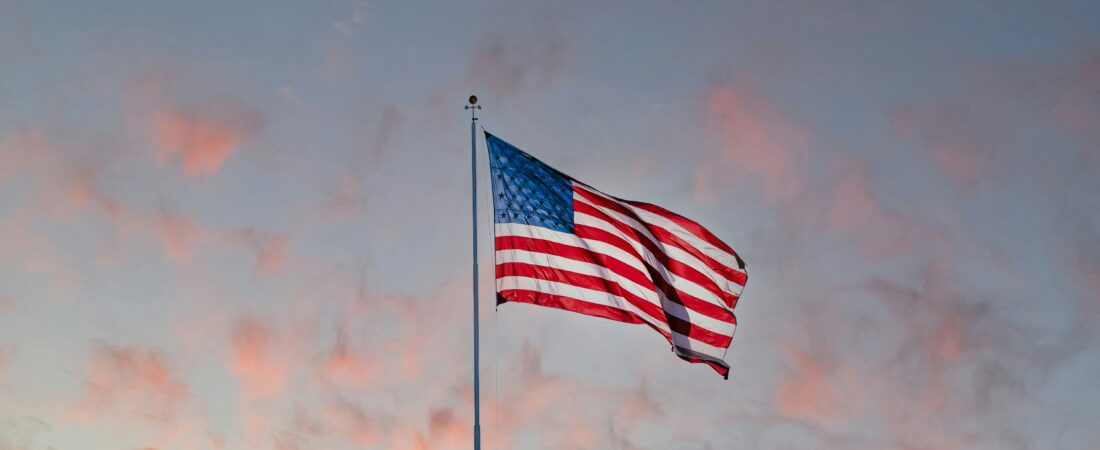
The Pledge of Allegiance turns 134 this year. Almost none of it started the way you’d think.
It was written in 1892 — not by a general or a founding father, but by a magazine. The Youth’s Companion, the biggest publication in the country at the time, had been selling American flags to schools to drum up subscriptions. They’d moved 26,000 of them and needed a reason to sell more. The 400th anniversary of Columbus was coming. So was the Chicago World’s Fair, built to mark it. A staff writer named Francis Bellamy was asked to come up with a short flag ritual for schoolchildren to recite that October. He wrote it in about two hours.
His original words were shorter than the version you know: “I pledge allegiance to my Flag and the Republic for which it stands, one Nation indivisible, with liberty and justice for all.” No “under God.” Bellamy believed in the strict separation of church and state and left it out on purpose. Those two words weren’t added until 1954, during the Cold War.
And for its first fifty years, the Pledge came with a gesture. Students faced the flag and extended a straight right arm toward it. It was called the Bellamy salute. If you saw a photograph of an American classroom doing it in 1935, you would not believe what you were looking at. Congress quietly replaced it with the hand-over-heart in 1942 — for reasons that, by then, were obvious.
That’s where it comes from.